

What makes a 'functional' community?
04/06/2026 • Leo Patterson Ross

Recently demolition fences started being placed around the first buildings in the Waterloo estate. This move attracted protests and prompted discussion about the estate renewal and the future of estates in general. On ABC Sydney the Minister for Housing and Homelessness, Rose Jackson, made a comment saying that estates, in particular 100% public housing estates, are not “functional communities.” This is an assertion worth discussing, because it goes to the heart of the strategy NSW brings to supporting public housing residents.
While we can recognise that Minister Jackson was talking about future estates, it is unavoidable that members of the community currently living in Waterloo or in many other existing estates around NSW will hear it as suggesting that their existing communities are not functional. But what makes a functional community? And what would help address any dysfunction?
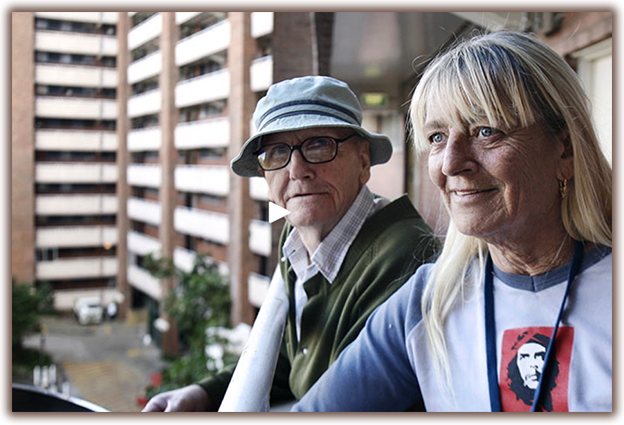
There are of course many aspects of community – both social and physical. For instance, we know that many people living in public housing estates have stronger relationships with their neighbors than people in private dwellings do. In the film 900 Neighbours, made about and with residents of the Northcott estate, Charmaine described feeling her daughter was safer in that inner city estate than she would be in a suburban area, because for 500 metres all around everyone knows her. Charmaine’s reflection has stuck with me for many years.
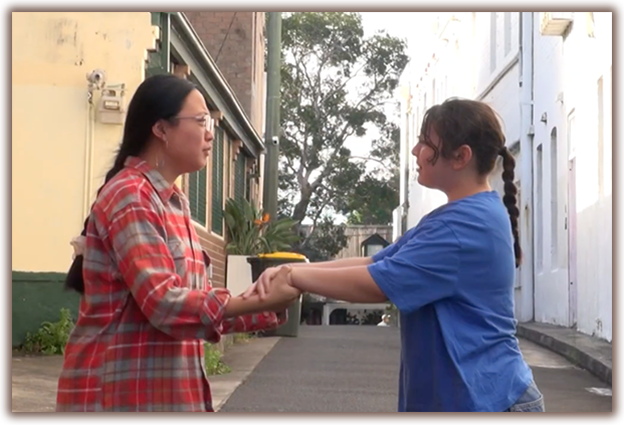
In the recent film Waterloo 2050 produced by young people of the area, Eliza speaks about this sense of community in the face of adversity:
"One of the good things about living in housing is everyone's super friendly. I think, because most people have been through some hard stuff, they have lots of compassion and care about others. So you know there's like issues with addiction, domestic violence, poverty and all these things, but I feel like everyone kind of bands together and supports each other because they know what it's like… if there wasn't that sense of community, then it would be a lot harder life."
We can see in communities like Hamilton South in Newcastle, facing extremely tough circumstances and anti-social behaviour, that community members continue to try and get together and advocate for themselves because they care about their neighbours, they care about the outcomes, and that's generated because of a connection and a strong sense of community. This was also expressed more than 10 years ago when Shelter NSW was asking community residents about how they viewed the need for responses to anti-social behaviour and found acknowledgement both of the frustrations and the need for support. In what became the title of the paper, the residents were clear that "we look after people here."
We also know that the challenges communities face aren’t caused by the people living there. Poverty, and disconnection from infrastructure and services are often the real issues. These are, ultimately, a choice of government. Our society can raise the rate of Jobseeker and other Centrelink payments. Our society can ensure public transport services run through communities and we can fund health services at the level people need. The failure to address these issues doesn’t change because of the density of public or other social housing – the issues are simply less visible for outside observers.
Mixed estates
Back in post-war England, the Labour government set up much of the post-war reconstruction with a vision of everyone in the community being cared for – in particular across health and housing. Housing Minister Aneurin ‘Nye’ Bevan held a positive vision for communities where “the doctor, the grocer, the butcher and the farm labourer all lived in the same street.” Council housing was to be made available to everyone, with eligibility restrictions lifted but allowing people who wanted to remain in private dwellings to do so. This inclusive approach welcomed more people into social housing, creating communities in what could have remained financially and sustainable housing systems.
A side note for our current supply-focussed approaches. Nye Bevan caused a lot of building – 850,000 dwellings in 4 years – but he also was conscious of the longer term legacy, ensuring they were good quality housing. He noted that “We shall be judged for a year or two by the number of houses we build. We shall be judged in ten years’ time by the type of houses we build”. The homes he built were so good, private renters nearby were able to challenge rent increases because their own homes were both far more expensive and clearly lower quality – this is the power of good quality government housing that leads rather than follows the market.
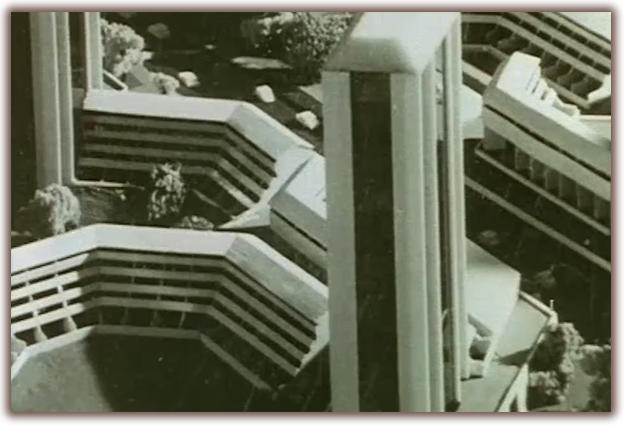
What Minister Jackson is describing is a fairly widely held theory of estate renewal and social housing provision generally that you can draw a line back to the kind of thinking Nye Bevan hoped to achieve. However in application, and particularly through manufactured rather than organic social mix, this theory has increasingly been shown to miss the desired outcomes of mixed communities. The mixed tenure model is an attempt to try and avoid concentrations of disadvantage. The theory is that by having private owner-occupiers, private renters, and social housing tenancies in the same neighborhood, the interaction between neighbors will lead to better outcomes, particularly for the social housing tenants.
Often this theory doesn't pan out in practice in part because the homes in mixed tenure developments are still siloed off from each other. The most obvious sign of this is in the phenomenon of ‘poor doors’ that gathered attention recently. The difference in treatment between different buildings in a large estate redevelopment can have a similar effect. In the same way that the Meriton apartments already adjacent to the Waterloo estate aren't perceived as part of a single community, it's likely that privately held buildings in the renewed Waterloo estate will be held separate from the publicly owned (but community housing managed) buildings.
But deeper than that, the application of social mixing doesn’t tend to actually solve the underlying challenges facing the community, or it only solves these issues in a manner that works for the more affluent newer arrivals. While Waterloo is well connected now through various public transport options, consider an estate with no public transport links. If the arrival of new residents is accompanied with a new road for easy driving back out, but the existing residents have no greater access to cars or petrol, then disconnection is likely to remain.
"The application of social mixing doesn’t tend to actually solve the underlying challenges facing the community, or it only solves these issues in a manner that works for the more affluent newer arrivals."
It’s also the case that the theory of social mixing transfers the cost of development away from government – handing over at least parts of an estate for someone else to do the work and reap the financial benefit. Over the time of Waterloo’s development successive governments have been asked to show their working on funding the various scenarios, including retaining public ownership of the whole, though to our knowledge no government has shared the results. This leaves space for doubt and a lack of confidence in the decision making.
We can't ignore that these developments come in an environment where public housing is not appropriately prized by government, and while we have seen increased funds available they are not being made available at a level that would be needed over time, and the public housing system is still expected to be largely self-funding – that is, funded by the tenants living in the homes. In its 2025 annual report, the Land and Housing Corporation reported receiving $870 million in rent, and government grants were focussed on new builds or responding to particular disasters. There is ultimately a series of choices further upstream. This significantly hampers and limits the range of options that can be made feasible. The federal government chooses to use Commonwealth Rent Assistance (CRA) to community housing as a direct funding pool that is not available to public housing, and maintains welfare payments at extremely low levels. The state government chooses to limit eligibility to public and community housing and limit its own income stream as well.
What is often not on the table, is the ability for communities to choose for themselves what is important to them and what improvements they would like to see in their communities.
Giving communities choice and control
Jen Rignold, long-time resident and supporter of her public housing community at Airds-Bradbury, with another tenant-resident developed a number of reflections on how service providers, particularly housing providers, should work with residents in a guide we published Listen, Ask, Respect. In that guide she said:
"The exceptional service providers I have known have all followed a simple formula:1. They sat quietly and listened
2. They asked what has been done/worked/not worked/etc
3. Then they asked what we wanted or needed to achieve
4. Then they worked in partnership with us."
This gets to a major aspect of building up communities – it’s about the community, and bringing new people into feeling part of the community. It’s notably not often part of the current approach to estate renewal. Giving communities a real sense of belonging, of choice and control, also ensures that the always uncomfortable process of relocating is experienced as part of a process that the community choice and influenced with real power.
Since 2018, estate renewals in London (where government funding is involved and more than 150 homes are effected) have been required to hold ballots to ensure plans have the residents' support. This drastically alters the dynamic of estate renewal. The community is involved from the beginning of the processes, not the end, and concerns or opposition can be aired and discussed and addressed or the project risks not moving forward.
But it’s clear that giving residents meaningful decision-making input doesn’t stop renewal efforts – in October last year the largest renewal project so far got the green light from community residents with 177 homes being demolished to provide 650 new homes. This came in an estate where regeneration plans had previously stalled – the original plans starting in 2012. What’s notable is that while affordability was a part of the concerns, the community ultimately backed the reforms because they could also see the investment into the community’s infrastructure – road repairs, transport as well as facilities.
Communities and tenants know best what they need – that’s why tenant participation that takes the time to build up structures for widespread and meaningful engagement, and hands real decision-making power to the community and then supports them with information and structures to utilise it are so powerful.
Recently we published a new report on tenant participation, examining the history of tenant participation across the previous decades and some potential new paths forward under the new Homes NSW model. We really encourage everyone involved in supporting public and community housing renters to read and engage with this area of social housing practice that is often overlooked.
Some essential reading on social mix and redevelopments:
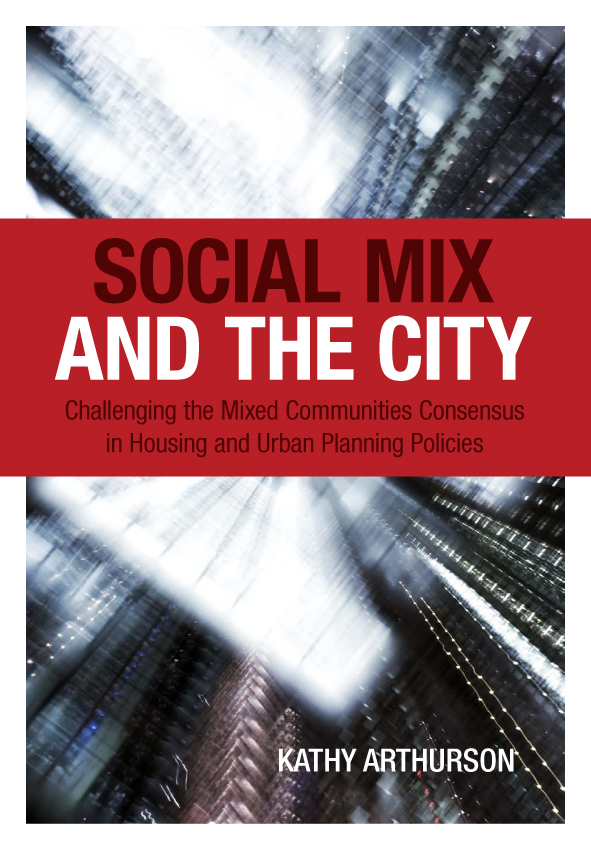
- Arthurson: Social Mix and the City – a book that should occupy a spot on every housing sector professional's bookshelf
- Morris, Jamieson, Patulny: Is social mixing of tenures a solution for public housing estates? – this article reviews 11 primary studies that examine the impact of social mix on public housing estates.
- Chiaranussati: Mixed Tenure Policies and Urban Inequality – this article offers a Bourdieusian Critique of Putnam’s Concept of Social Capital
- Darcy and Rogers: Inhabitance, place-making and the right to the city: public housing redevelopment in Sydney – this article brings Lefebvre's Right to the City thesis into conversation with Bauman's notion of the flawed consumer to account for the neoliberal colonisation of public tenant organising in urban redevelopment, and draws on a case study of public housing redevelopment from Sydney (it's behind a paywall but contact the authors!)
- Sisson: Examining claims about the social objectives of estate renewal – this guest contribution to the Tenants' Union blog, examines the social objectives claimed for the Waterloo redevelopment and what is needed to deliver them