
Rent Increase Negotiation Kit
Many renters are already doing it tough, and getting a rent increase adds to the burden. The first question to ask is "Is the rent increase notice valid?" Following recent changes to tenancy laws, the landlord cannot increase your rent more than once in any 12 month period – learn more in our Rent Increases factsheet.

Rent Increases factsheet
The legal rules about rent increases.

Tips: Negotiating with the landlord
14 tips to use in a negotiation.

Podcast: Negotiation for renters
How to prepare, what to expect, and ways to go about negotiating.

Letter Generator
The Letter Generator tool below will check rents in your area and create a personalised letter and data summary for your postcode and residence. You can use this in your negotiations or as supporting evidence at the Tribunal.
Start by putting in your postcode and other details.
Please note: This tool may work better on a desktop than a mobile. While you can use it to check, we ask that you do not print from the mobile version as it will not appear as intended.
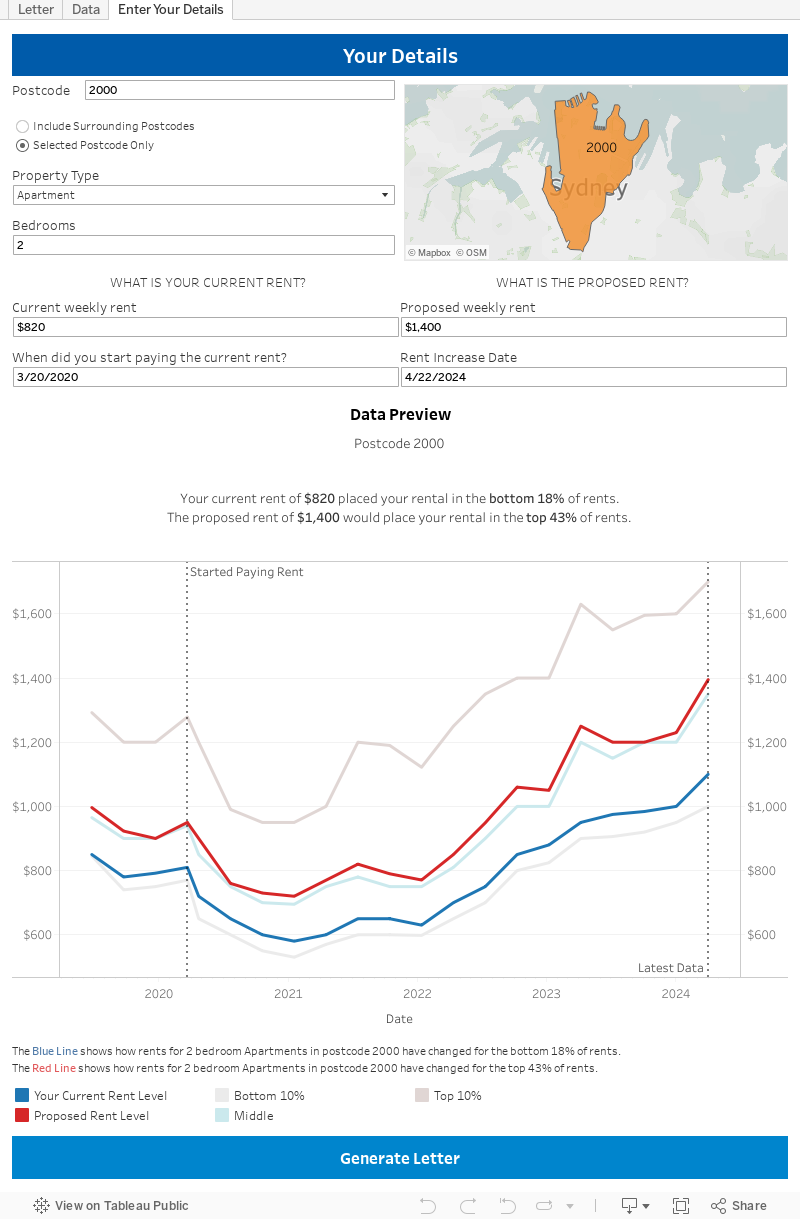
The letter generator tool may take a few moments to load. If you have trouble using it, try using it in tableau.
For best results, please use this tool on a desktop, using Chrome or Safari, rather than a mobile.
Instructions for downloading your letter
1. Put in your postcode and details above, then tap Generate Letter.

2. In the box that pops up above, tap the drop-down arrow under 'Include', and select 'Specific sheets from this workbook.'
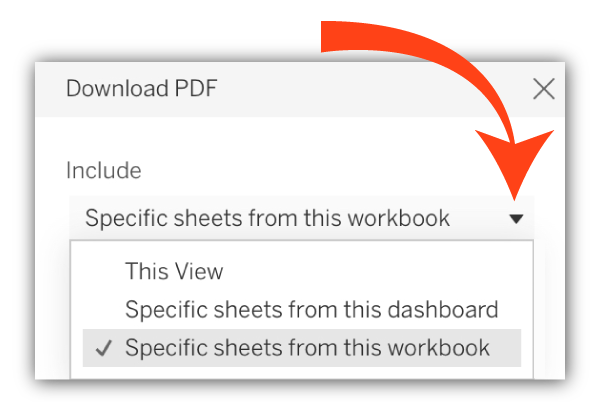
3. Select the 'Letter' and 'Data' sheets.
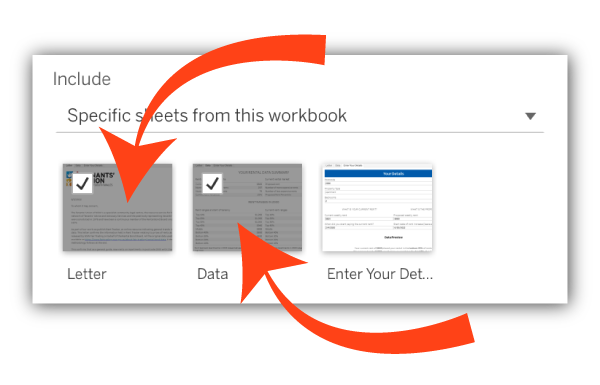
4. Tap Download.

Jenny's rent increase story

"I got the first rent increase notice a few months before the lease was up for renewal and felt a horrible chill run all through my body. The landlord was demanding an increase of $100 per week – a huge amount for anyone, but especially for a one-bedroom apartment. On one level I was outraged and wanted to write an angry reply straight away, but at the same time I really love living here and I don’t want to be forced to leave, so I knew I had to keep things respectful and factual. I looked at the Tenants’ Union Rent Increase Negotiation Kit and used some of the negotiation tips, like trying to remind them the ways that you’re a good tenant (I always pay my rent on time!) and also a real person. But I think the evidence is what really counted.
"I used the data about median rents in my area, and what percentile my previous rent was, to say what a reasonable rent increase would be. We went back and forth a few times and eventually we settled on a $50 increase.
A year later we did it all again. This time they suggested an $50 increase, but using the data I could again show that rents in my area hadn’t gone up that much, and so they agreed to limit it to a $30 increase. It feels ridiculous to celebrate that my rent has ‘only’ gone up by $80 over two years, but I try to remember that if I hadn’t negotiated at all I would have been paying that extra $100 per week the whole time. So I’ll have saved at least $3,640 over the two years thanks to negotiating.
It seems like a lot of real estate agent processes are automated these days, so if you reply with a polite request to discuss it, and then offer some evidence to back up your counter proposal, you have a good chance of getting a more reasonable outcome."
More information
You may also find these other sample letters useful:
If you have feedback on the Rent Increase Negotiation Kit, or need help generating your letter, we welcome you to contact the Tenants’ Union.
If you need tenancy advice, please contact your local Tenants Advice and Advocacy Service.
Remember that negotiation comes with risks
The landlord may decide they want to end your tenancy agreement, however there are rules around how and when they can end the agreement. See Factsheet: Eviction – landlord ends tenancy. The NSW Civil & Administrative Tribunal (NCAT) is an independent body which deals with certain kinds of disputes between landlords and tenants. You may wish to apply to the Tribunal. See Factsheet: NSW Civil and Administrative Tribunal.
Rent Tracker Research Project
The Rent Increase Negotiation Kit and Rent Tracker are projects of the Tenants’ Union of NSW, using data published by NSW Fair Trading. Updates are monthly or as often as the data is made available from Fair Trading.
For more parts of the Rent Tracker project, see:

Rent Tracker Postcode Tool
Rent data by postcode. Useful for comparing rents in different areas, or if you're moving to a new area.

Rent Tracker Research Project
Further analysis of rents and bonds.
Donations
If you love the Rent Tracker project, please consider making a donation to the work of the Tenants’ Union.
This resource is intended as a guide to the law and should not be used as a substitute for legal advice. It applies to people who live in or are affected by the law as it applies in New South Wales, Australia.
©Tenants’ Union NSW