

Getting smart about rental bonds
16/09/2026
The bond is usually the largest lump sum a renter pays, and covering it when moving, or losing it unfairly, or not knowing how to claim it, can be a real financial setback – especially if you're already under cost-of-living pressure.
In this article we report on several positive developments – from the NSW government's new portable bonds scheme, to our bond loss data analysis, and joint community education project in South-West Sydney.
Smart Rental Bonds – Portable bonds have started across NSW
Smart Rental Bonds, the NSW government's long-anticipated new portable bonds scheme, is now live for renters across NSW.
After an initial trial in Parramatta, Penrith, and the Central Coast, the scheme now covers all of NSW. However there are still certain requirements to use the scheme. For example:
- you must be moving between 2 rental homes in NSW, with the same tenants. (So members of a share house who are moving to different houses are not able to use the scheme.)
- you must have an existing Rental Bonds Online account and you must tell the new landlord/agent that you have an account, using the same name.
Check the full eligibility requirements on the Smart Rental Bonds page (NSW government).
We welcome the scheme, and recognise that it will ease some of the financial burden on tenants, particularly at the stressful and expensive time of moving home.
It is positive that tenants will no longer feel pressure to agree to an unreasonable claim in order to recoup the majority of their bond in the desperate rush of moving.
However we remain critical of the $25 user fee — a charge that will fall hardest on the lower-income renters the scheme is designed to help by avoiding costly loans or other financial stress.
The Tenants’ Union first proposed a version of the portable bonds scheme in 2018, in response to the growth of ‘bond alternatives’ and high-interest loans that renters were being forced into in order to cover a second bond while waiting for the first to be returned.
It's also worth mentioning that the scheme creates no difficulty for landlords and agents – for whom the government has planned extensively to ensure no increased risk or process. The only people who might find their practices are changed are any landlords or agents who claim bonds without a valid reason.
How the portable bonds scheme works
1. You are getting ready to move out of your old rental home. Your application for a new rental home has been approved. The agent for the new rental sets up a request for the bond to be paid.
2. You log into your Rental Bonds Online account and are given the option to pay a new bond or initiate a bond transfer. If you choose transfer you pay a fee of $25. If the total amount of the new bond is more than the total amount of the old bond, you are also required to pay the shortfall at this point.
3. The bond on the new rental property is covered by the NSW government (while the old bond is being assessed against any potential deductions).
4. You sign the new lease and are able to move into your new home.
5. The previous tenancy ends. If there is no claim on the old bond by the previous landlord, the full amount is transferred and you don't need to make any further payment to cover the new bond. If the landlord makes a claim on your old bond, and you agree with the claim, the remaining amount is transferred to the new bond. If you disagree with the landlord’s claim you can take the matter to the NSW Civil and Administrative Tribunal (NCAT) to resolve it.
6. Once you and the former landlord agree on a claim, or NCAT makes an order for payment, you're asked to pay any gap back to the government within 28 days.
Tenants' Union recognised for Bond Smart community project
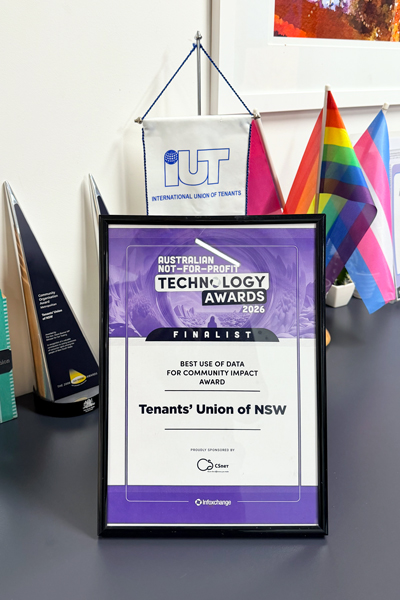
We were delighted to be one of the finalists in the 2026 Australian Not-For-Profit Technology Awards!
The awards recognise individuals and organisations that are not only adopting technology, but using it in thoughtful, creative and impactful ways to better support their communities. The judges noted that the 2026 finalists demonstrated how the nonprofit sector is not only adopting technology, but actively shaping it to better serve communities and respond to increasingly complex challenges.

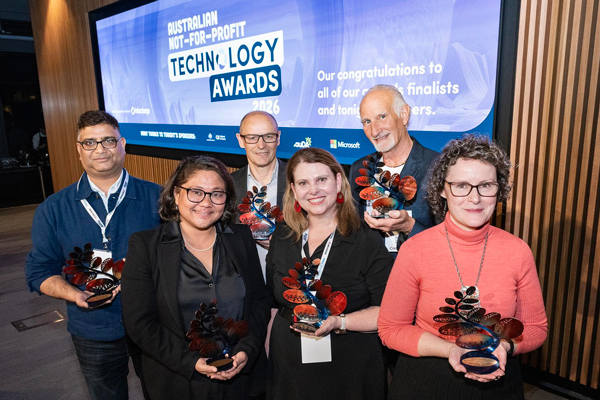
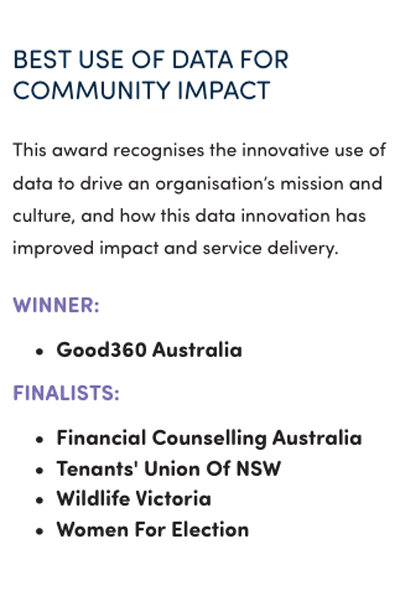
Our Bond Smart project was one of the finalists in the Best Use of Data for Community Impact category.
We congratulate the winners, Good360 Australia, for their use of real-time retailer and sector data to redirect surplus goods into life-changing support for communities!
Our Bond Smart project builds on our successful Bond Loss Tracker. We developed a new multidimensional data dashboard to better understand bond loss by mapping a combination of risk, vulnerability and potential impact.
Risk is quantified as the proportion of tenancies that end where tenants lose all of their bond. Vulnerability includes a number of dimensions such as poverty, education, and language. Our data analysis maps intersections of vulnerability geographically, in order to identify the most vulnerable areas of renters. Potential impact helps us understand how we can maximise the potency of our interventions to ensure our limited resources have the greatest impact.
Our analysis combines data sets from NSW Fair Trading, the NSW Civil and Administrative Tribunal (NCAT), and ABS Census.
In the dashboard, we use a visual language in order to bring out key aspects of the analysis. The colour of each circle represents the percentage of bond loss (risk), while the size of each circle represents the number of bonds where the entire bond was lost (severity). This allows us to quantify disadvantage and vulnerability and integrate a large amount of diverse information.
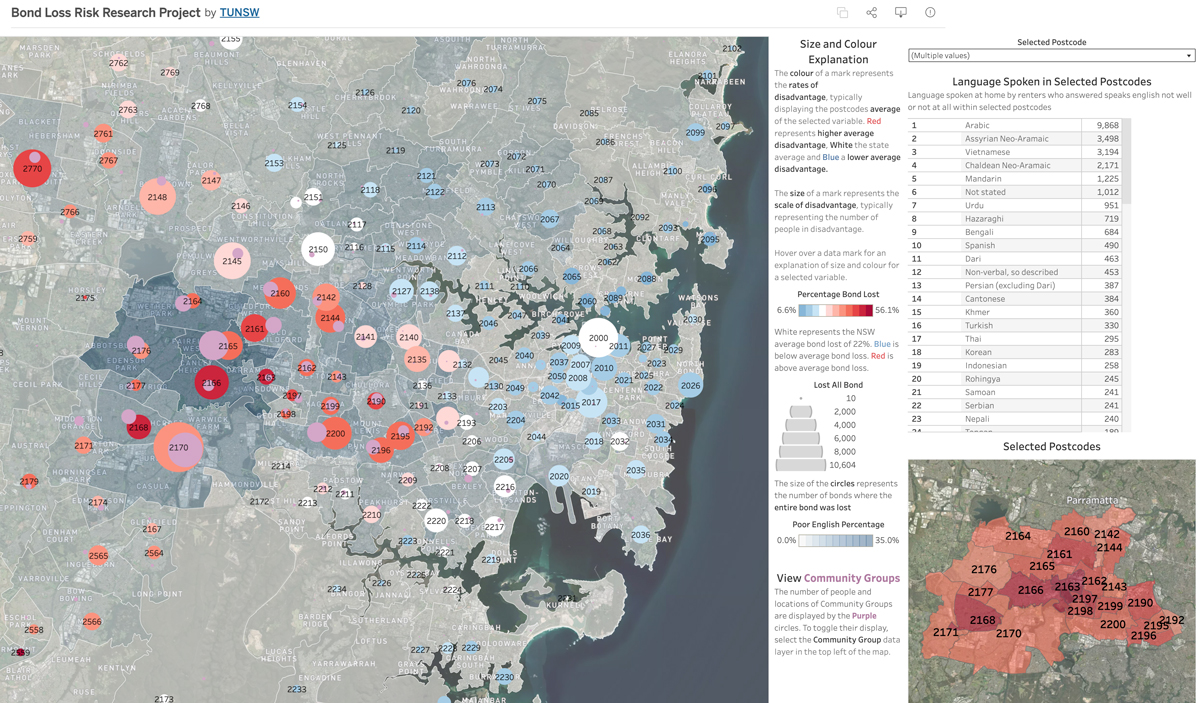
The dashboard allows us to test multiple potential explanations for why bond loss rates are higher in some areas than others. Testing multiple demographic variables, we found that education, income, and English proficiency each show a strong correlation with bond loss. All three factors converge in South West Sydney, and targeting renters with low English proficiency allows us to reach those most affected by all three risk factors at once – maximising the impact of our limited resources.
The dashboard also allows us to group postcodes by language group, showing us how many renters in a given area speak each language at home. This has been critical in identifying which specific communities to prioritise for outreach, and enabled us to design targeted and culturally-appropriate, rather than generic, campaigns.
Our analysis showed that in the Campbelltown, Fairfield and Liverpool Local Government Areas, a higher proportion of tenants are losing larger amounts from their bonds. In some of those areas, the rate of bond loss is over 3 times higher than the NSW average. For example in Cabramatta (located in the Fairfield LGA), nearly 40% of renters lose their entire bond – compared to an average of 14% across NSW. In the 2168 postcode (located in the Liverpool LGA), 37% of renters lose their entire bond. Our research was reported in the media: One in ten tenants lose their entire rental bond, new data reveals (news.com).
Community eduction in South West Sydney
In order to address the bond loss problem, we partnered with two awesome organisations who bring local and community-based knowledge and experience: the South West Sydney Tenants Advice & Advocacy Service (SWSTAAS) and Settlement Services International (SSI). We have also been working with interpreters and translators as required. Together we have been delivering a series of Bond Smart community education forums, where groups of renters from a range of cultural backgrounds learned about how to navigate recent rental reforms, sustain their tenancies and protect their bond, and how to spread this information in their communities.
Over the year, we delivered 11 Bond Smart presentations and workshops to a total of 107 community workers and 123 CALD community members in Vietnamese, Arabic, Dari/Farsi, and Rohingya languages. We were also able to reach newly-arrived refugees who are part of the LGBTQIA+ community.
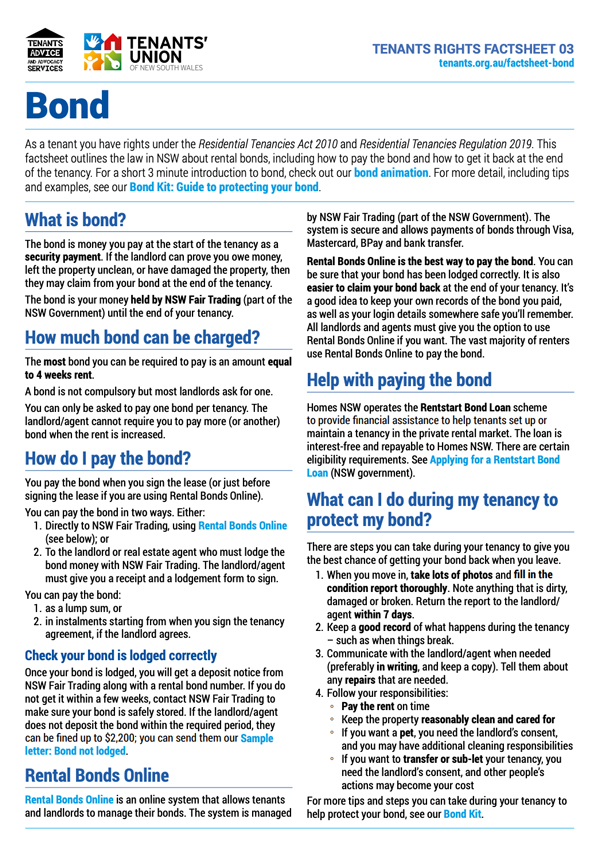
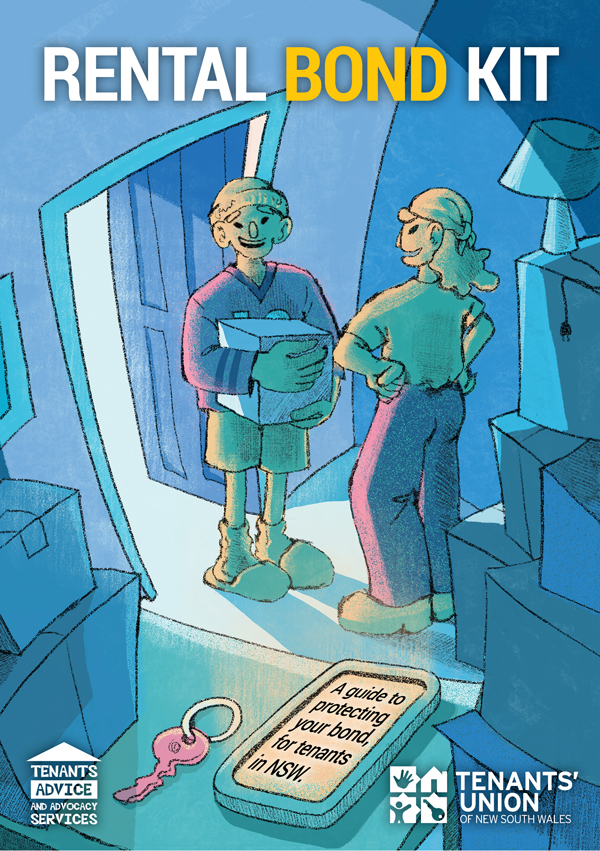
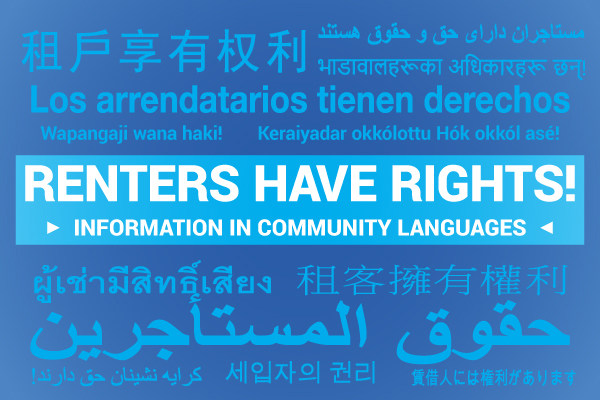
Each Bond Smart community education forum includes a listening component, where we seek to better understand the problems communities are facing. We have also produced several new and updated resources, including our Bond Factsheet, Bond Kit, and Getting your bond back animation. We have translated our Introduction to renting factsheet into 13 key languages, as identified using data analysis.
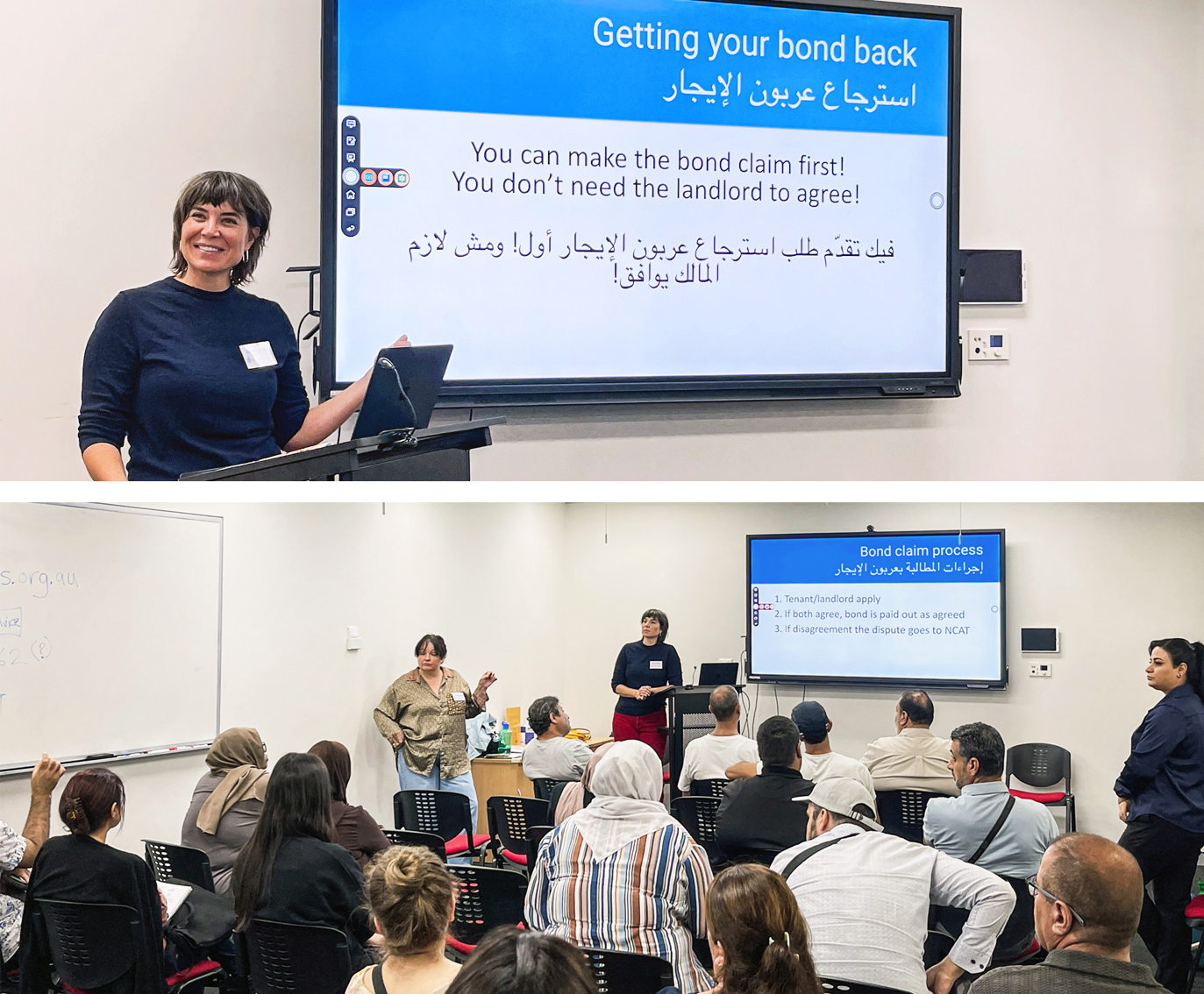
The Bond Smart project has had a real impact for some of the most disadvantaged renters in South West Sydney.
In our post-workshop evaluation surveys, over 80% of respondents agreed or strongly agreed that:
- “I know where to go for information and help if I am having problems with bond.”
- “I’m more likely to ask for repairs.”
And 90% of respondents agreed or strongly agreed that:
- “I am more likely to claim the bond myself at the end of the tenancy.”
- “I am more likely to challenge a landlord’s unfair bond claim.”
“As a tenancy advice service, we are proud to be part of the Bond Smart project to raise awareness among our community for tenants and community workers to not only protect their bond but also protect their peace of mind. We have been connected to community services who want to act on training received & continue to spread information to their clients.” – Joyda Zinck, Tenants Advocate, South West Sydney Tenants Advice and Advocacy Service
“The Bond Smart program has been incredibly helpful for many of my clients. Prior to participating in this session, most of them had little understanding of their rights as renters or the process for claiming back their bond if it has been unfairly deducted. The information and practical tips provided have also equipped them with strategies to reduce the risk of losing their bond in the future. Overall, this topic has proven to be extremely valuable for our community.” – Marian Saba, Gaza Association Australia
“Thank you for delivering an excellent tenancy education session on 27 February. The workshop was clear, practical, and highly engaging, and our 18 attending clients gained strong understanding of rental applications, inspections, condition reports, repairs, and bond processes. The hands‑on activities and one‑on‑one advice were especially valuable, and the collaboration with our Arabic interpreter ensured full participation. We appreciate your professionalism and the meaningful impact this session had on our clients. We look forward to continuing this partnership.” – Remsen Sada, Team leader Case Management, Humanitarian Settlement Program, Newcomers, Settlement and Integration, Settlement Services International
More info...