

Practical steps towards eco-renting
15/09/2026 • Jonathan Barnett

Jono Barnett is a solicitor at the Illawarra Legal Centre (ILC) and has also worked as a Tenant Advocate at the Illawarra and South Coast Tenants Advice and Advocacy Service (ISCTAAS), based at ILC. He is passionate about the wellbeing of people and the natural environment, which are of course inseparable. As a renter for many years, he has reflected on what renters can do to look after the earth. He has tried many of the things discussed in this article in those tenancies (with mixed success), among other eco-focused activities. Riding his bike to work and elsewhere is a particular favourite! A version of this article was originally published by Manna Gum.
We are living through a crisis of record high rents and record low vacancy rates. More people are renting for longer before buying a home, if they can buy at all. More than ever before, the question of how to build healthy, sustainable communities in Australia requires considering the relationships between renters, landlords, and their properties.
Sustainability in rental homes is not only an environmental issue. Inefficient homes compound health and financial problems, especially for people who are already struggling and can only afford low-quality housing. As the climate crisis deepens, these problems will only get worse.
"More than ever before, the question of how to build healthy, sustainable communities in Australia requires considering the relationships between renters, landlords, and their properties."
While many owner-occupiers are taking up opportunities to upgrade their homes, rentals suffer from a ‘split incentive’: landlords usually pay for upgrades, while tenants receive the immediate benefit through lower bills and improved comfort. Aligning these interests with the public interest of sustainable housing has become a significant Australian policy problem.
Leaving aside the ‘split incentive’ policy problem, this article will explore what renters can do right now. There’s plenty to say about how landlords can manage their properties wisely, as obviously they have greater agency over the property that they own – we can certainly hope that responsible landlords will use this agency well. However, tenants are not without agency, limited though it may be.
While many tenants feel hesitant to assert their rights or request changes in a tight rental market where insecurity is common, there remain opportunities to produce and consume sustainably in rental homes.
So what can environmentally conscious renters do?
Tenants often have more rights than they realise, and this is true of sustainability pursuits. It can be daunting to exercise your rights, so it helps to do your research first and carefully consider what might be possible. Some things can be achieved without involving the landlord. If you do need to contact them, a polite email is a good place to start (see more on negotiating tips below). If you need advice on your legal rights as a renter, contact your local Tenants Advice and Advocacy Service. If you are renting in strata, there are other rules that come into play – see our strata factsheet for more.
Here’s a list of things renters can consider:
- Get ready for Minimum Energy Efficiency Rental Standards (MEERS). These already exist in the ACT and VIC, and hopefully will soon exist in NSW. For more see our MEERS submission.
- Use your right to repairs to address issues like water leaks, mould, unsafe appliances and drafts. See our Factsheet: Repairs and maintenance.
- Use your right to minimum water efficiency standards. See more in our Factsheet: Utilities – water, energy, internet.
- Choose an environmentally conscious energy retailer and purchase certified GreenPower. Some electricity plans reward households for shifting energy use outside peak demand periods or participating in demand-response. You may be able to offset the additional cost of GreenPower, or even save money overall. To compare GreenPower options, check out Energy Made Easy (Australian Energy Regulator).
- Use efficient plug-in appliances like portable induction cooktops, air fryers, electric frypans, efficient space heaters, and heated lap blankets to reduce gas reliance and electricity use.
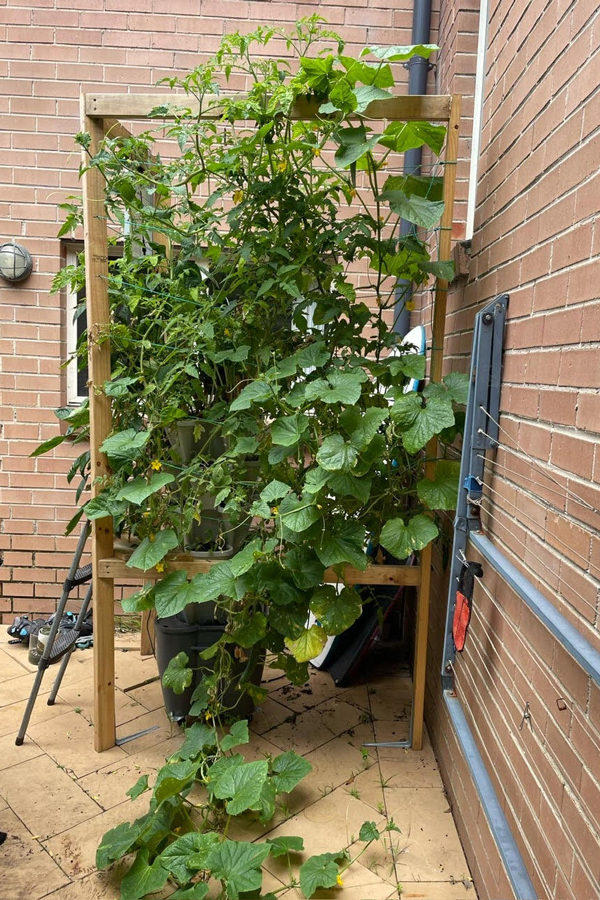
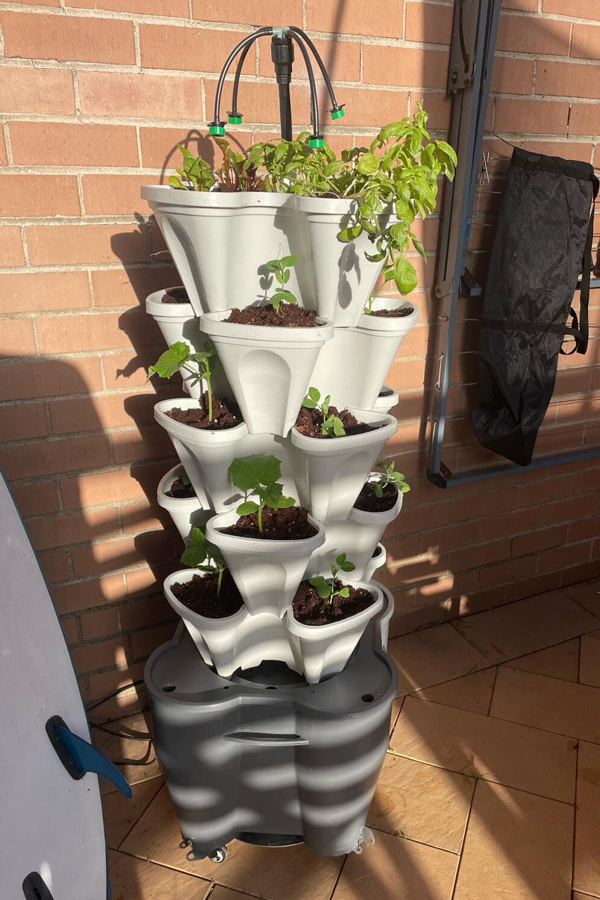
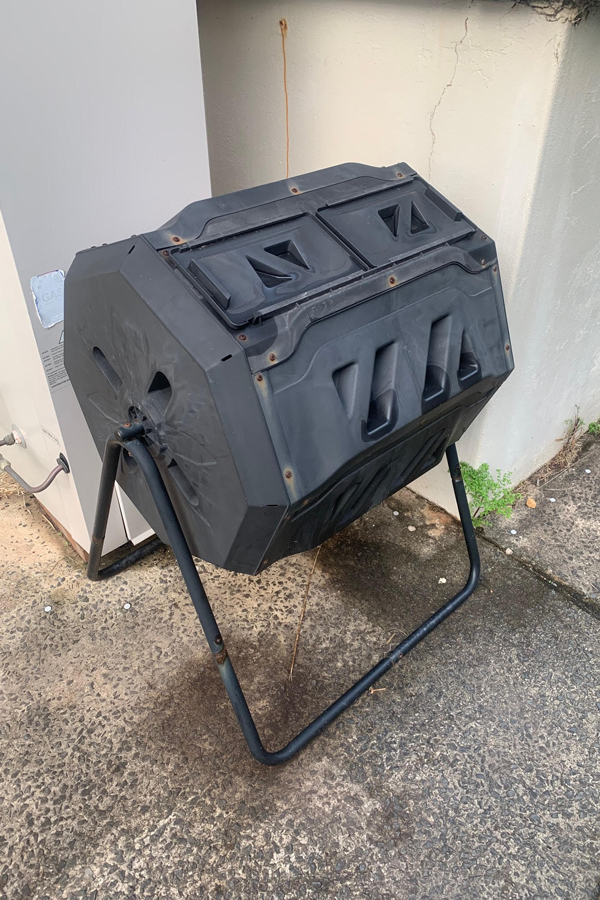
- Grow plants in pots and use a contained, portable compost system (some examples pictured).
- Reduce waste and energy consumption in the usual ways, like switching appliances off at the wall, using draft stoppers, heating and cooling the home naturally where possible and with appliances only as needed, and so on. There are plenty of resources available on this.
- You have the right to request minor modifications at your own expense. This could include installing energy efficiency measures, such as LED lights, window insulation film, thermal curtains or blinds, and flyscreens to enable airflow. Landlord consent is required but they must not unreasonably withhold that consent. Make sure you get their consent in writing. See our resource on Property modifications for older tenants for context. Also check out the NSW government’s new Home Energy Saver initiative. The landlord may be able to access a zero-interest loan to make improvements, and renters may be able to access a discount on certain upgrades (coming soon).
- Depending on how the modifications are agreed to and installed, you may be able to take some things with you when you move. It’s a good idea to get agreement about this from the landlord in writing, to avoid any problems when moving out.
- You have the right to request minor modifications to plant in the ground. Landlords should not unreasonably refuse consent for planting if existing vegetation does not need to be removed and the plants will not grow taller than two metres.
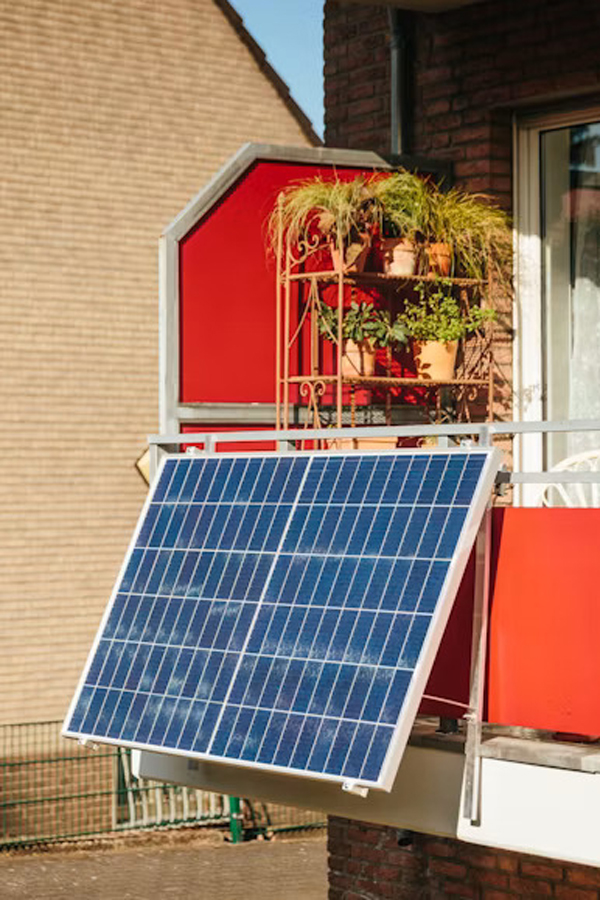
- Use small portable off-grid solar or battery systems – though check any strata by-laws and consider safety and practicalities carefully first. Some solar panels are portable and can be taken with tenants when they move (an example pictured, image credit: Yuma Solar).
- Look into community energy initiatives in your area. For example, check out Solar Citizens, Community Power Agency, and Sweltering Cities.
- Request a pet or pets such as chickens. Some pets, cared for responsibly, can bring environmental benefits. For the rules on getting a pet in your rental home, see our pets factsheet.
If your landlord tries to block any of the above, you may be able to legally challenge their refusal. Get advice from your local Tenants Advice and Advocacy Service.
Consider negotiating
Beyond the above list, anything can be done if the landlord agrees to it. Tenants can request and negotiate over the full gamut of home sustainability measures including:
- More serious gardening work or planting (e.g. trees) that involves larger changes than the minor modifications rule allows.
- Improving energy and water efficiency (beyond any enforceable minimum standards), such as with insulation, ventilation, heat pumps, electrification of appliances, reverse-cycle air conditioners, external shading, double glazing, better draft sealing, water tanks, greywater systems, rooftop solar, household batteries, EV charging, and so on.
These things might be more complicated in strata properties, but if you can get your landlord or neighbours to raise ideas with the strata committee, you might be able to influence the entire strata scheme. For more on the rules when renting in strata, see our strata factsheet.
"Tenants can request and negotiate over the full gamut of home sustainability measures."
Negotiating with the landlord can be daunting. Start by reading our Tips: Negotiating with the landlord. When it comes to sustainability upgrades, there may be additional factors you can mention to the landlord, not least of which is the added long-term value many improvements will bring to their property. It’s worth starting off with a friendly email or chat – in some cases, landlords are willing to be reasonable and ethical.
In addition to the negotiation tips mentioned above, some other ways to increase the chance of getting a landlord’s agreement to sustainability measures include:
- Talk to the landlord about government programs that incentivise upgrades such as the NSW government’s new Home Energy Saver initiative. There are also other programs that cover things like rooftop solar, hot water systems, insulation, reverse-cycle air conditioners, and household batteries. If you live in an apartment, check out the NSW government Solar for apartment residents scheme (you would need to get the strata committee on board). See also the NSW government department of Climate and Energy Action page on Financial support: Rebates, grants and incentives.
- You could offer to share the up-front cost of an upgrade, or ask for an upgrade at the same time as negotiating about a proposed rent increase. For example, you could research the size of rooftop solar and/or battery system that suits your energy consumption, estimate how much per week it would save you in energy bills, and offer to pay up to that amount extra in rent in exchange for the landlord installing that system. For more on negotiating around a rent increase, see our Rent Increase Negotiation Kit.
- Team up and make joint requests with like-minded neighbours who have the same landlord or are part of the same strata scheme.
- Mention how upgrades would improve the landlord’s property value and reduce maintenance costs and mould risk.
- Explain your motives and invite the landlord to make values-based decisions given the health and climate benefits.
Always make sure to put any agreements in writing. If you have a verbal conversation, follow up with an email confirming what was agreed.
Making broader change
Renters’ voices can be powerful in campaigns for improvements to the law and to the way our society works.
Your state MP is there for you to call, meet, or write to. This is especially worth doing when relevant issues are in the news due to a recent event or because the government is considering changing the law. When both renters and landlords express support for better sustainability-focused rules for rental properties, it can be particularly powerful.
"Renters’ voices can be powerful in campaigns for improvements to the law and to the way our society works."
Everybody’s Home is a great campaign. They provide opportunities to advocate for housing justice generally, including minimum energy standards for rentals. Healthy Homes For Renters is another good initiative, they also have a specific form which they ask supportive landlords to complete.
These groups also regularly share opportunities for renters to participate in research projects about their experiences and the energy performance of their homes in order to inform policy and campaigns. If you are willing to tell your renting sustainability story, you can also do so via our share your renting story form.
Lastly, if sustainability changes in your tenancy just aren’t happening for reasons outside your control, you can still channel your enthusiasm into meaningful action in other ways. You could consider investing in a community-owned solar project like Haystacks Solar Garden as an alternative to having panels on your home, though the financial equation is different. You could join a local community garden, repair café, bush care or environmental advocacy group. Above all, keep hoping, working towards sustainability, and eco-dreaming! Together we can bring about the change we all need.
Good luck!
Disclaimer: This article is intended as a guide and inspiration, not legal advice. Legal information in this article applies to people who live in, or are affected by, the law as it applies in New South Wales, Australia. © Tenants’ Union of NSW.


