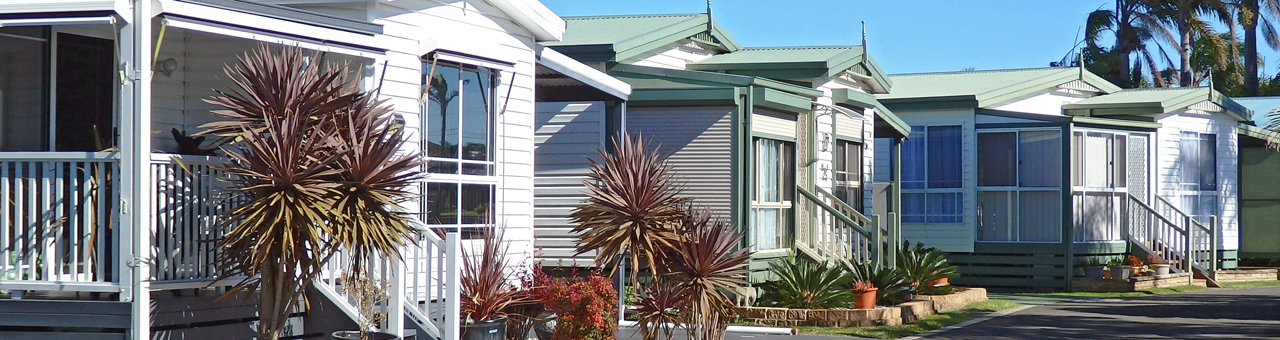




Tenants in land lease communities: rights & responsibilities
Tenants who rent a home in a residential land lease community (sometimes called a residential park or caravan park) have rights and obligations under both the Residential (Land Lease) Communities Act 2013 and the Residential Tenancies Act 2010.
The laws apply whether you rent your home from the operator of the community, or another person who owns the home. They also apply regardless of whether you have a written or verbal tenancy agreement.
The Residential (Land Lease) Communities Act 2013 and Residential Tenancies Act 2010 do not apply if you are renting a home in a residential community for a holiday. For more factsheets on tenants rights, see tenants.org.au/resources/all
Your rights before moving in
From the 31st of October 2024 laws changed so that landlords, agents and third party companies are no longer allowed to charge prospective renters for background checks when applying for a rental property.
Your rights when moving in
When you move into a home in a land lease community you have the right to:
- be given a free copy of the residential tenancy agreement, which is a legally binding contract
- be given a condition report filled out by your landlord or the operator
- be required to pay no more than 2 weeks rent in advance
- have any bond you pay to your landlord or operator lodged with NSW Fair Trading. The bond cannot be for more than 4 weeks rent
- be given your place, including any outdoor space, in a safe, clean & reasonable condition.
See more in our Factsheet: Starting a tenancy.
Your responsibilities when moving in
You must give the landlord a copy of the condition report with your comments within 7 days of the start of the tenancy. The condition report is important evidence if there is a dispute about the bond at the end of the agreement.
Your rights during the tenancy
Throughout your tenancy you have the right to:
- be given receipts if you pay your rent in person or by cheque
- be given at least one fee-free way to pay the rent, and the right to change your payment method (this is new – it started 19/05/2025)
- quiet enjoyment of the premises
- reasonable safety and security
- have necessary repairs carried out in a reasonable time
- be given proper notice when the landlord wants to visit
- be given 60 days written notice of a rent increase. You can challenge a rent increase if you think it is excessive by making an application to the NSW Civil and Administrative Tribunal (NCAT) within 30 days of receiving the rent increase notice
- There are limits around when the landlord/agent can increase your rent – for most tenancies the rent is capped at one increase per 12 months, and not in the first 12 months of the tenancy. (This is new – it started on 31/10/2024.)
- You can request to keep a pet by submitting the approved Pet Application Form. Landlords can only refuse if there are reasonable grounds as prescribed in the Residential Tenancies Act. Landlords can impose reasonable conditions.
- If the landlord wants to end your tenancy agreement they must give a reason, with evidence. They can no longer issue a ‘no-grounds’ notice to end your tenancy. The amount of time they must give for different reasons to end the agreement has also changed.
For more, see our factsheets: Repairs and maintenance, Rent increases, Pets, Privacy and access, Utilities – water, energy, internet, and Eviction – landlord ends tenancy.
Your responsibilities during a tenancy
During the tenancy you have an obligation to:
- pay rent on time
- care for the premises
- report the need for any repairs or maintenance
- pay electricity and gas bills, as long as the premises are separately metered
- pay water bills, as long as the premises are separately metered and the premises have been fitted with water efficiency measures (from 23 March 2025 toilets must be dual flush and have a 3 star WELS rating to meet the water efficiency measures).
- not alter or make additions to the premises without the landlord’s written permission
- not change any locks without the landlord’s written permission
- not interfere with the peace, comfort or privacy of your neighbours
- not use the premises for illegal purposes
- ask the landlord’s written permission before you make any changes to tenancy arrangements, for example sub-letting or transferring your tenancy to another person
- abide by the community rules and ensure your visitors also comply.
For more, see our factsheets: Overdue rent, Repairs and maintenance, and Utilities – water, energy, internet.
The NSW Civil and Administrative Tribunal (NCAT)
The Tribunal hears disputes between landlords and tenants. If you and your landlord or operator cannot resolve an issue you may be able to apply to the Tribunal for an order to enforce your rights. Time limits apply to applications so do not delay. If you are going to the Tribunal, it is a good idea to get advice from your local Tenants Advice and Advocacy Service.
Advice and assistance
If you need advice or assistance regarding your rights and responsibilities, or a Tribunal application, contact your local Tenants Advice and Advocacy Service.
Factsheet updated May 2025.
⮕ Land lease community factsheets


